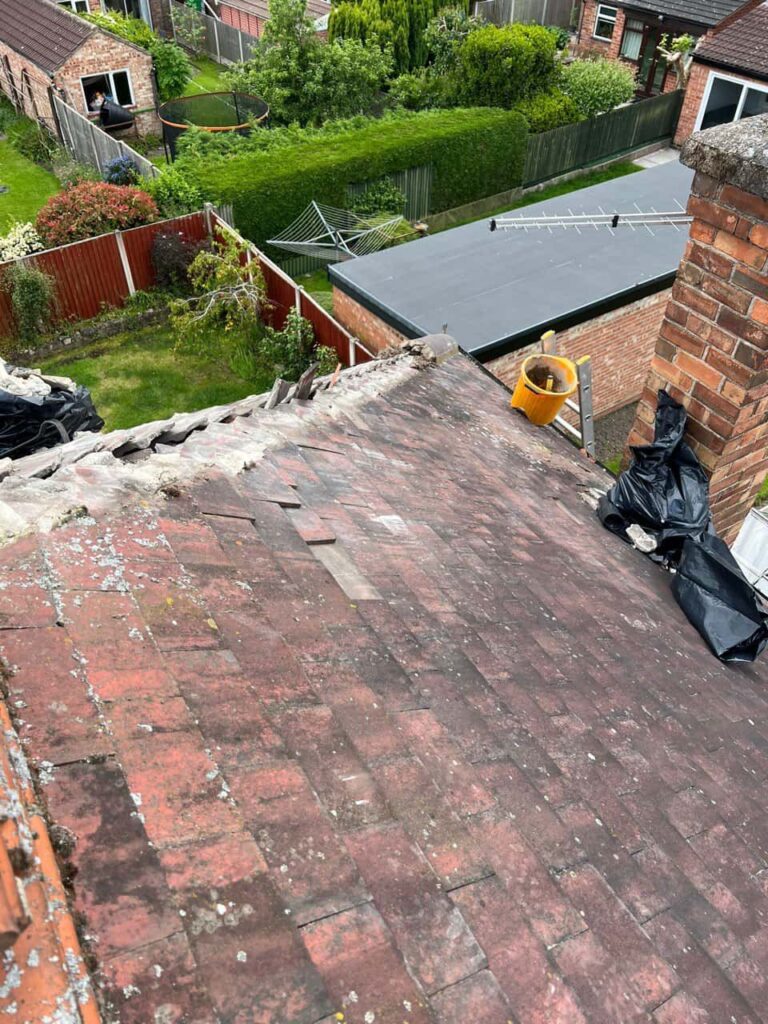
High winds can put significant pressure on a roof, particularly around exposed edges, ridges, tiles, slates and other vulnerable areas. While some damage is immediately obvious, smaller defects can be difficult to spot from ground level.
After a period of strong winds, checking for signs of roof damage can help identify problems before rain and further weather exposure make them worse. For homeowners in North Hykeham, Lincolnshire, understanding what to look for can help determine when professional roof repairs may be required.
How High Winds Can Damage a Roof
Strong winds can lift, shift or loosen roof materials, particularly where existing wear or deterioration has already weakened the installation.
Potential problems include:
- Slipped or displaced roof tiles
- Cracked or broken tiles and slates
- Missing roof coverings
- Loose ridge or hip tiles
- Damaged flashing
- Dislodged guttering or roofline components
- Gaps around vulnerable roof junctions
Even when the roof appears largely intact, a closer inspection may reveal smaller defects that could allow water to enter.
Look for Missing or Displaced Roof Tiles
Missing tiles are one of the easiest signs of wind damage to recognise. Gaps in the roof covering can leave the underlying structure exposed to rainfall and further wind.
Tiles can also become displaced without falling completely from the roof. An uneven row or tile that appears to have moved may indicate that the fixings or surrounding materials have been affected.
Do not attempt to climb onto the roof after high winds. A professional inspection can identify loose or missing materials safely.
Check for Cracked or Broken Materials
Not all wind damage involves materials being completely removed. Tiles and slates can crack, chip or break as they move or come into contact with surrounding materials.
A damaged roof covering may allow moisture to reach the layers beneath it. If left unattended, repeated rainfall can potentially contribute to dampness and deterioration.
Visible cracks or broken materials should therefore be assessed rather than assuming they are insignificant.
Inspect Ridge and Hip Tiles
Ridge and hip tiles are particularly exposed because of their position at the highest and most prominent parts of the roof.
After strong winds, look from ground level for ridge or hip tiles that appear uneven, loose or out of alignment. Movement in these areas can create gaps and may indicate that the bedding or fixing system requires attention.
Because these areas are difficult to access safely, professional roof repairs are recommended when damage is suspected.
Look for Damaged Flashing
Flashing helps protect vulnerable points where the roof meets features such as chimneys, walls and other junctions.
High winds can loosen or damage flashing, creating potential entry points for rainwater. Signs of a problem may include visible lifting, gaps or dampness around internal areas close to the affected section.
Flashing problems are not always easy to identify from the ground, making professional assessment useful after significant wind exposure.
Check Inside the Property for Signs of Water Ingress
Some wind damage only becomes apparent once rain enters through a weakened area of the roof.
After high winds followed by rainfall, check ceilings, upper walls and loft spaces for:
- New damp patches
- Water stains
- Drips
- Wet insulation
- Damp roof timbers
- Musty smells
The visible location of water damage may not correspond directly with the point where water entered, as moisture can travel along roof structures.
Why Small Wind Damage Should Not Be Ignored
A single displaced tile may appear to be a minor problem, but leaving an opening in the roof can expose surrounding materials to further weather.
Repeated rainfall can worsen an existing defect, while subsequent periods of strong wind may cause additional materials to become loose.
Arranging an assessment soon after discovering damage can help establish the extent of the problem and whether repairs are required.
When to Arrange a Professional Roof Inspection
Professional advice should be considered if you notice missing materials, visible roof movement, damaged flashing, leaks or unexplained dampness after high winds.
An inspection can identify areas that may not be visible from ground level and determine which components require repair or replacement.
This is particularly useful when the roof has been exposed to severe weather and there is uncertainty about its condition.
Professional Roof Repairs in North Hykeham, Lincolnshire
At North Hykeham Roofing Repairs, we can assess roofs affected by high winds and identify loose, damaged or missing materials. From individual roof coverings to flashing and other vulnerable areas, professional assessment can help establish the appropriate repair work.
If your roof has been affected by high winds in North Hykeham, Lincolnshire, contact North Hykeham Roofing Repairs to discuss the damage and arrange a professional roof inspection.
Conclusion
High winds can cause anything from a single displaced tile to more extensive roof damage. Missing materials, cracked coverings, loose ridge tiles, damaged flashing and signs of water ingress should all be taken seriously.
Checking your roof after strong winds and arranging professional attention when damage is suspected can help protect the property from further weather exposure. If you have concerns about wind damage to your roof in North Hykeham, Lincolnshire, contact North Hykeham Roofing Repairs to arrange an assessment.
Call us on: 01522 302 298
Click here to find out more about North Hykeham Roofing Repairs
Click here to complete our contact form and see how we can help with your roofing needs.